In the bustling streets of Abidjan, where backfiring motorbikes and orange taxis jostle for space, a quiet revolution is under way. Côte d'Ivoire, the economic powerhouse of West Africa, has set itself a bold target: by 2030, 10% of its vehicle fleet – around 160,000 vehicles – will run on electricity. It is an ambition that combines climate imperatives, technological innovation and colossal challenges, in a country where electric vehicles (EVs) are still a rarity.
An ecological emergency in a fast-growing country
With its 26 million inhabitants and rapid urbanization, Côte d'Ivoire is seeing its vehicle fleet swell visibly. In 2023 it numbered 1.5 million vehicles, a figure expected to rise to around 1.6 million in 2025 on current trends. But this expansion comes at an environmental cost: the transport sector, responsible for 30% of CO2 emissions in 2020, weighs heavily in the climate balance. Faced with robust economic growth – 6.5% of GDP in 2023 according to the World Bank – and a persistent dependence on fossil fuels, the Ivorian government wants to change the game.
“We can no longer ignore the impact of our mobility choices,” a senior official at the Ministry of Transport said recently. The aim? To reduce the carbon footprint, diversify energy sources and align with global climate commitments, such as the 30.41% reduction in emissions by 2030 promised at COP 21.
From charging stations to subsidies: a plan in motion
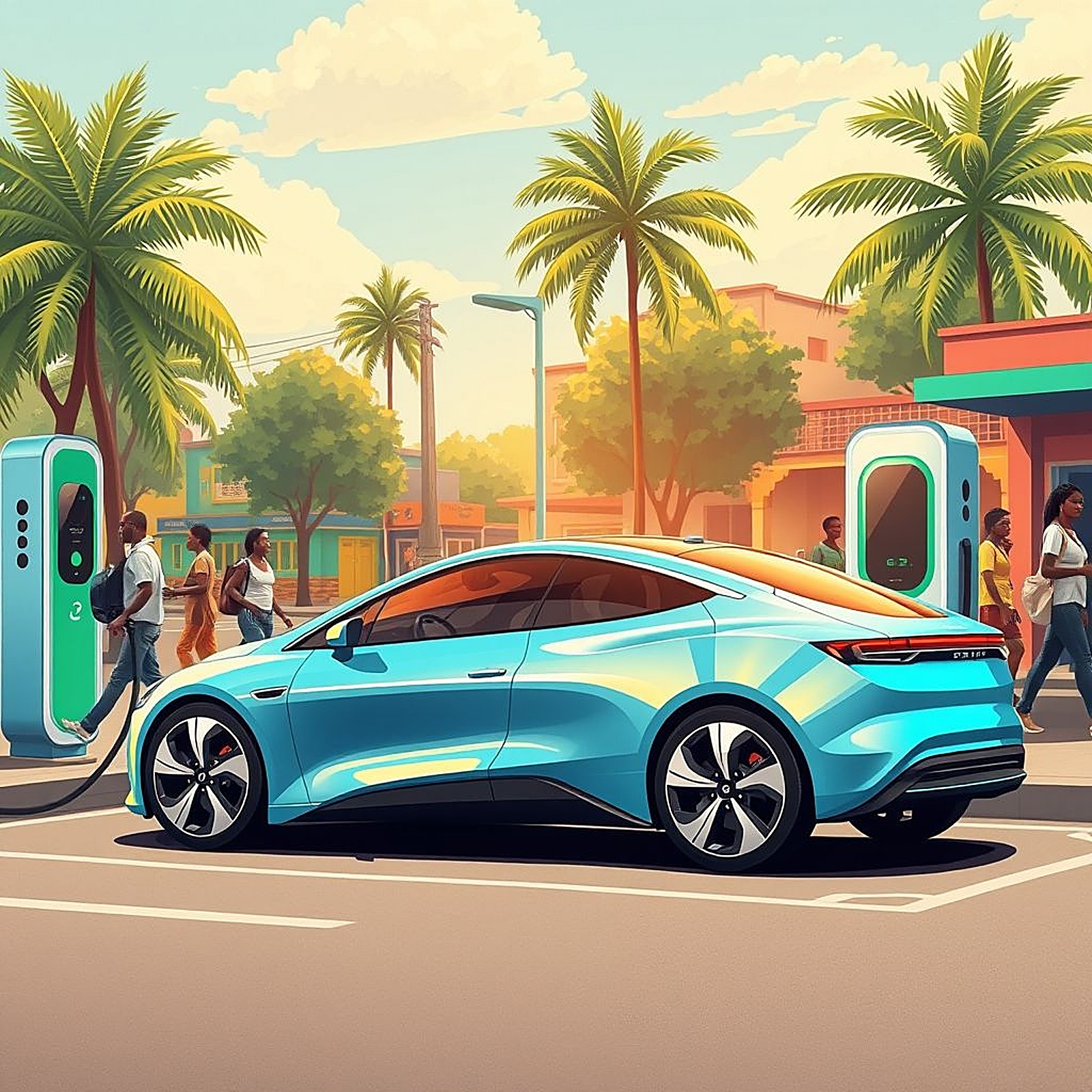
To turn this vision into reality, the government is deploying an arsenal of measures. By 2030, 1,500 charging stations should be dotted across the major cities and main roads. It is a titanic challenge, but the first steps are encouraging: in 2023, the local startup EVTech announced the roll-out of 500 stations by the end of the year, with around ten points already operational in Abidjan, according to “La Tribune Afrique”. “We want to make electric mobility practical and accessible,” its CEO explained at the time.
On the financial side, tax incentives are in the pipeline: reductions in import duties and subsidies for buyers. Price remains a major obstacle: in 2023, an EV cost 20,000 dollars on average, compared with 10,000 for a gasoline car. Added to this are partnerships with giants such as TotalEnergies and EDF-CI, and campaigns to convince Ivorians of the advantages of an engine that does not roar.
A road strewn with obstacles
But the transition will not be smooth. In 2023, out of 1.5 million vehicles, fewer than 1,000 were electric – a drop in the ocean. In 2025, that figure has no doubt risen slightly, but it remains marginal. The electricity grid, with its 2,000 MW of capacity in 2022, has to keep pace. The country aims for full electrification by the end of 2025, but growing demand calls for massive investment, particularly in renewable energy. A glimmer of hope? A biomass power plant, fueled by oil palms, is planned for 2025, reports “Le Monde”.
Another stumbling block: the cost of EVs, prohibitive for many. “At 20,000 dollars, it's a dream out of reach,” says Koffi Yao, a taxi driver in Yopougon. And without a dense, affordable charging network, adoption is likely to stall.
The promise of an electric future
Yet the benefits are undeniable. Less dependence on imported oil, maintenance costs halved – thanks to cheap electricity – and more breathable air in congested cities. “With an EV, I could save 50% on my daily costs,” calculates Aminata Koné, a shopkeeper in Cocody. On a larger scale, this transition could also boost employment: the International Labour Organization predicts 24 million green jobs worldwide by 2030.
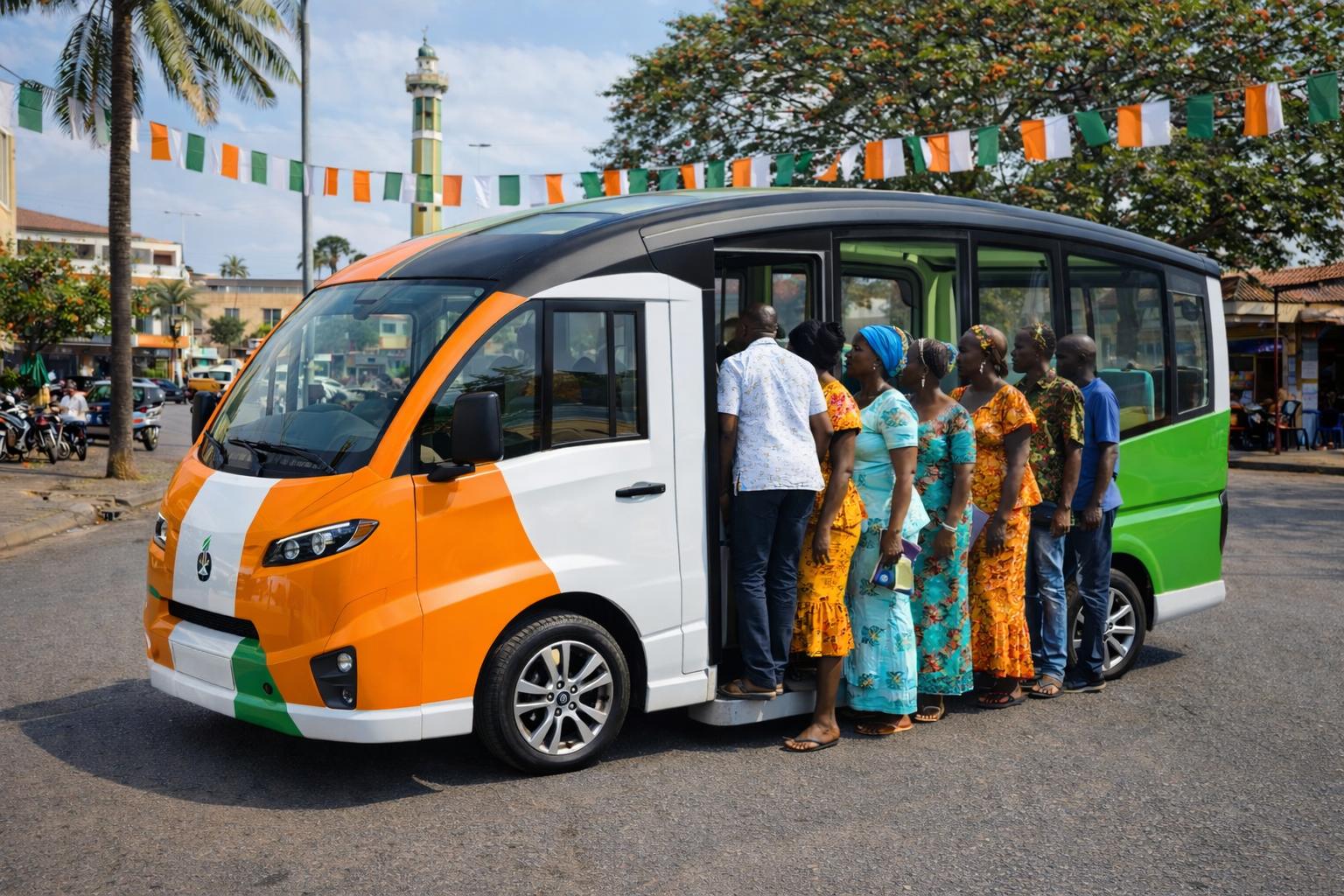
International initiatives, such as UNEP's support for electric buses and light solutions, are adding to the momentum. And Côte d'Ivoire is not alone: pioneers such as EVTech, which imported the first Tesla Model S in 2021, are showing the way. The Ministry of Transport, supported by the FDRT (Road Transport Development Fund), is leading the roll-out of an electric minibus production plant. A feasibility study entrusted to ALVENTIS Automotive is under way and should be delivered by next June.
Toward regional leadership?
Midway between 2025 and 2030, Côte d'Ivoire is at a crossroads. Winning this bet means not only greening its vehicle fleet, but also establishing itself as a model in Africa. “If we succeed, we will prove that development and sustainability go hand in hand,” says one industry expert. Electric motors are already humming timidly in the streets of Abidjan. It remains to be seen whether they will become the background noise of a greener future.