A plan for an electric vehicle production plant could transform the West African industrial landscape.
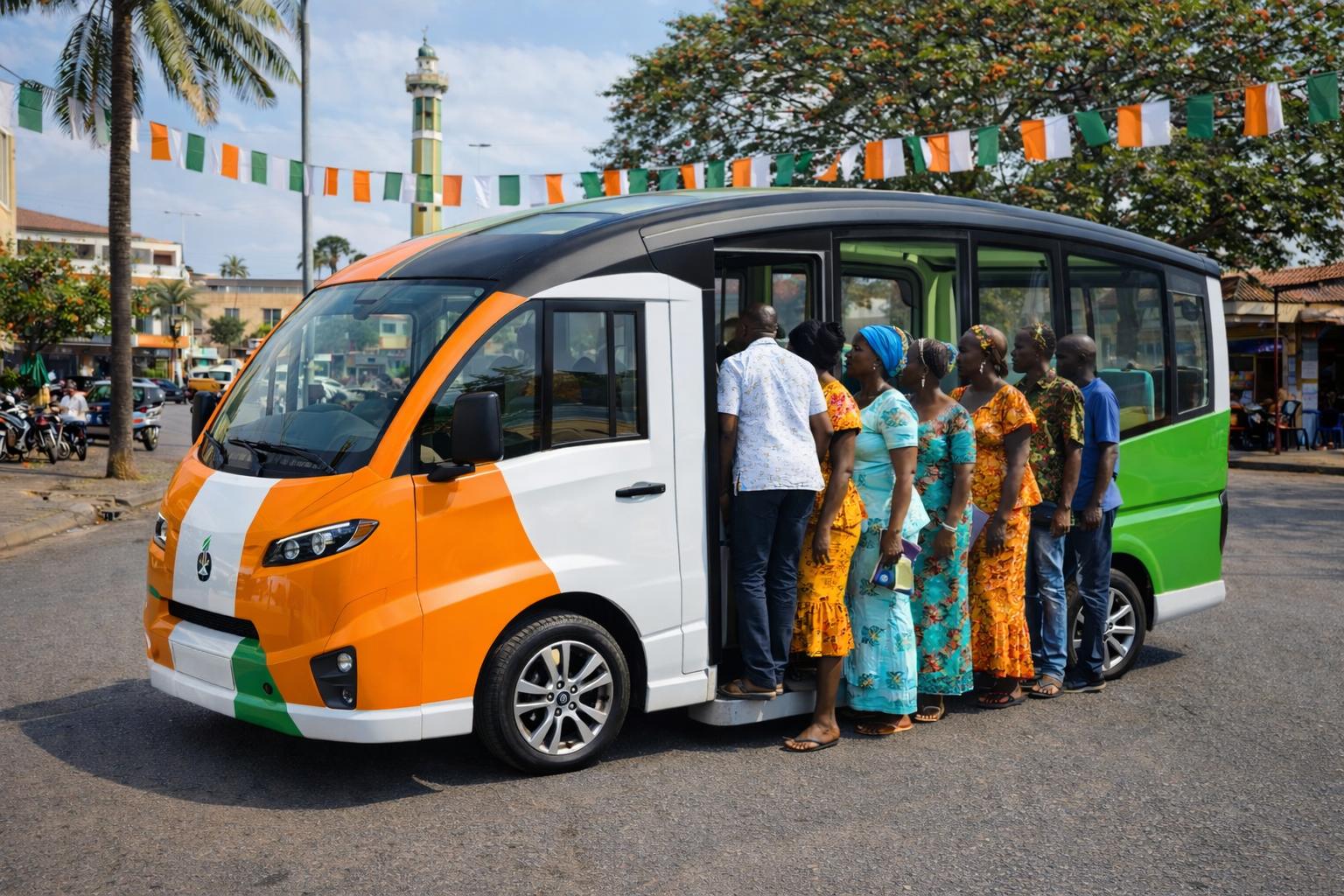
In the bustling streets of Abidjan, the famous “gbakas” — the colorful minibuses that form the lifeblood of urban transport — tirelessly continue their chaotic ballet. But tomorrow, these aging vehicles that spew black smoke into a tropical sky could well give way to a new generation of quiet, clean carriers. An ambitious project for the local production of electric minibuses and microbuses is taking shape, driven by favorable conditions that could make Côte d'Ivoire the pioneer of electric mobility in West Africa.
A booming market
The transport sector accounts for around 6% of Ivorian GDP and directly employs more than 300,000 people. With a population of 32.5 million that is expected to reach 35 million by 2030, and an urbanization rate of 53.46% that is edging toward 60%, mobility needs keep growing. Minibuses and microbuses, the quintessential modes of public transport, represent a market estimated at between 3,000 and 5,000 vehicles a year — a volume sufficient to justify local production.
“The demand is there, structural and lasting,” explains one industry observer. “Today, Côte d'Ivoire imports large numbers of used vehicles, often more than ten years old, which pollute and are expensive to maintain. There is a real opportunity to renew this fleet with new vehicles that are suited to the local context and respectful of the environment.”
Assets that make the difference
Côte d'Ivoire has serious arguments with which to attract investors. The second-largest economy in West Africa, with a GDP of around 99 billion dollars, the country remains among the most dynamic on the continent and has enjoyed remarkable political stability for more than a decade. It is forecasting economic growth of 6.7% in 2026, supported by inflation contained at 1.5% and a gradual improvement in the tax-to-GDP ratio, expected to reach 15.7% of GDP, compared with 15% in 2025.
But it is perhaps in the field of energy that the country stands out most. With an installed electricity capacity of 2,500 MW and an electrification rate of 75%, Côte d'Ivoire has a relatively reliable energy infrastructure — an essential prerequisite for the development of electric mobility. The energy mix, which combines hydroelectricity (30%) and natural gas (60%), also offers competitively priced electricity compared with many neighboring countries.
“Côte d'Ivoire has every asset needed to become a regional hub for the production of
electric vehicles: a central geographical position within ECOWAS,
a market of 400 million potential consumers, and a government
determined to support the energy transition.”
The industrialization challenge
Turning this opportunity into industrial reality will not, however, be plain sailing. The initial investment, estimated at between 50 and 100 million dollars depending on the target production capacity, represents a major financial challenge. Above all, the automotive industry requires specific technical skills — mechanical engineering, on-board electronics, electrical engineering — that are still underdeveloped locally.
Another point to watch: the supply chain for critical components. Lithium-ion batteries, electric motors and electronic systems will have to be imported, mainly from Asia. This dependence exposes the project to fluctuations in raw material prices and to tensions in global logistics chains. The project's promoters will therefore have to work with these realities, relying on a gradual approach: starting with the assembly of vehicles from imported kits, before progressively increasing the rate of local integration.
An ecosystem to be built
The success of the project will not be decided on the factory floor alone. It will also depend on putting in place a complete ecosystem: charging stations, technicians trained in maintenance, tax incentives for buyers. An entire sector has to emerge, in close coordination with the public authorities.
Côte d'Ivoire's climate commitments — the country has pledged to reduce its greenhouse gas emissions by 28% by 2030 under the Paris Agreement — create a favorable policy framework. The National Development Plan 2021-2025, extended by the 2026-2030 plan, provides for massive investment in sustainable transport infrastructure. This is a windfall for the project's backers, who could benefit from framework contracts with public transport companies to secure their first production volumes.
Africa on the move toward electric mobility
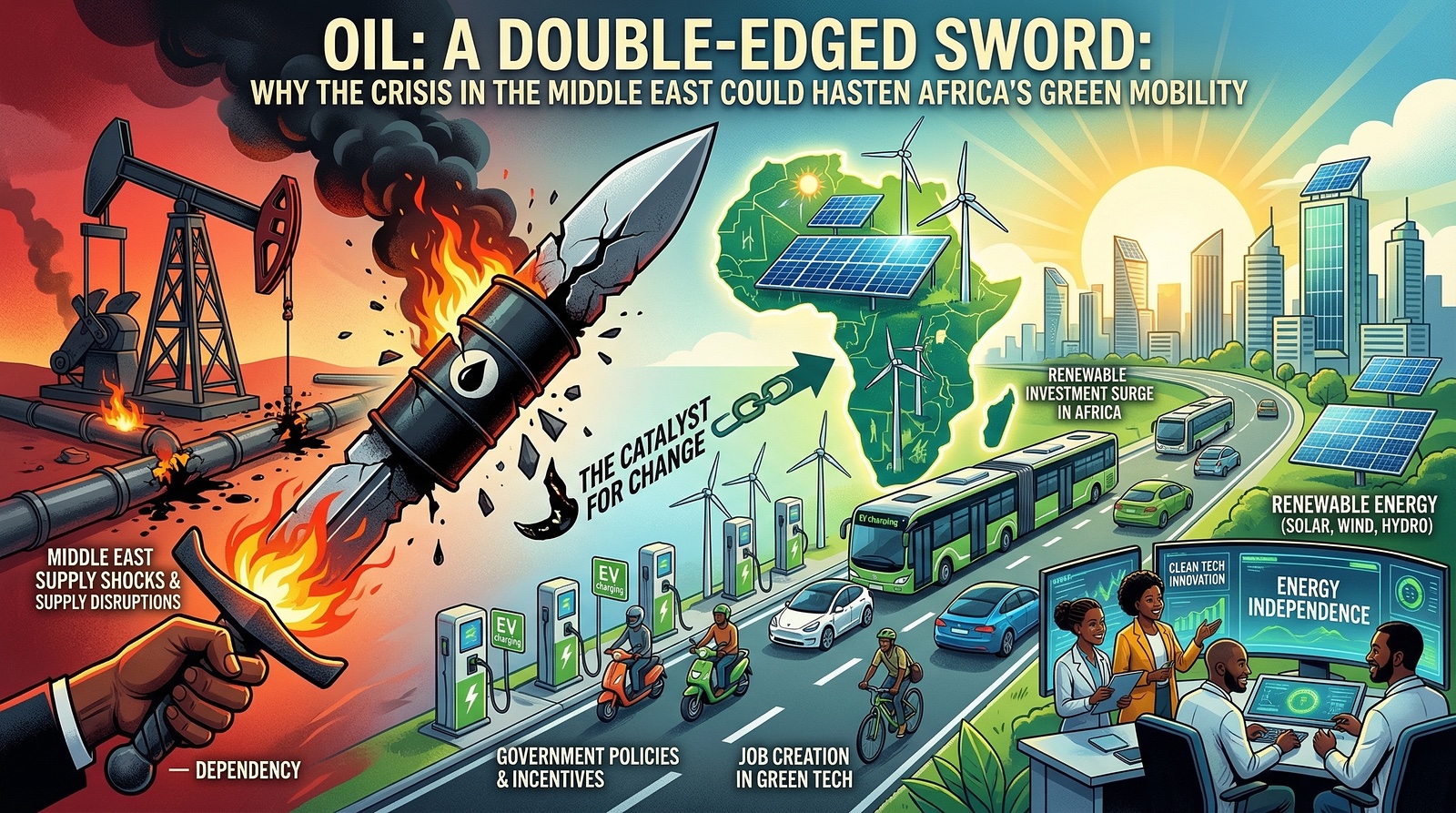
Beyond Côte d'Ivoire, the whole African continent is awakening to electric mobility. The global share of electric cars is expected to reach 26.7% in 2026, then 42% in 2030, 64.1% in 2035 and finally 83% in 2040, according to the “Auto Vista 24” platform. Africa still remains on the sidelines of this revolution, but several countries are setting things in motion: South Africa, Morocco, Kenya and Rwanda have launched proactive programs to promote electric vehicles.
In West Africa, the Economic Community of West African States (ECOWAS) adopted a directive in 2022 aimed at harmonizing the energy policies of member states, including provisions on electric mobility. This regional harmonization opens up the prospect of an integrated market, in which minibuses produced in Côte d'Ivoire could be exported to Ghana, Senegal, Mali or Burkina Faso.
The time has come!
At the end of this analysis, one question remains: is the project feasible? The answer is yes, but under certain conditions. The opportunity is real, underpinned by solid economic fundamentals and a favorable political climate. The challenges are equally real — substantial investment, skills development, building an ecosystem. These obstacles are not insurmountable, provided a pragmatic approach is adopted and the right technical and financial partners are brought on board.
For Ivorian decision-makers, this project represents a unique opportunity to position the country as a leader of the energy transition in West Africa. For investors, it is admittedly a risky bet, but a potentially very profitable one in a rapidly expanding market. For citizens, it is the hope of cleaner, quieter, more modern mobility. The gbakas of the future will no longer look like those of today — and the entire Ivorian economy will be transformed as a result.