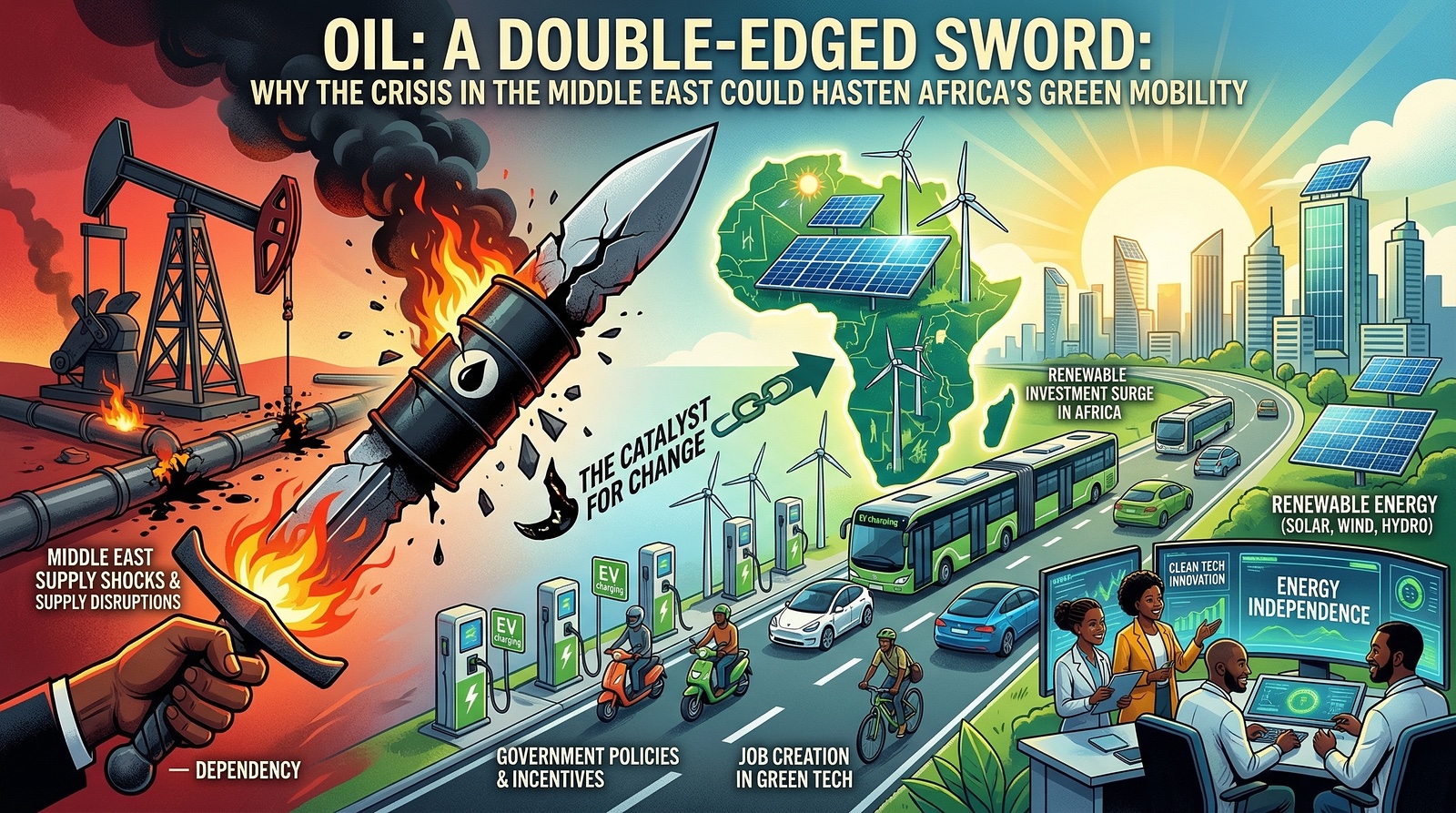
As the world holds its breath in the face of geopolitical upheavals in the Middle East and oil prices fluctuate with each new tension, one certainty is emerging with brutal clarity: dependence on hydrocarbons is a strategic risk of the first order. For the African continent, often seen as the last bastion of expansion for the traditional automotive market, this crisis could paradoxically prove to be the most powerful of catalysts. Africa must no longer be the forgotten party in the energy transition; it could well become its boldest laboratory.
Vulnerability as the mother of invention
For decades, the economic development model in Africa has been tied to growth driven by fossil fuels, for exporting countries and structural importers alike. But the threat hanging over supply routes — the Strait of Hormuz and the Suez Canal being vital transit points for a fifth of the world's crude oil — highlights a fragility that has long been underestimated. Almost all African countries hold fuel reserves for only 15 to 25 days, well below the 90-day standard recommended by the International Energy Agency.
African economies, which devote a considerable share of their precious foreign currency to importing refined petroleum products, find themselves on the front line of price instability. In Nigeria, already weakened by persistent inflation, soaring prices at the pump place the cost of a distant conflict on the shoulders of the most vulnerable consumers. In this context, low-emission mobility — whether electric vehicles (EVs) or natural gas vehicle (NGV) solutions — is no longer an ecological luxury reserved for the countries of the North but a necessity for economic and security sovereignty. The urgency is no longer only climatic; it is budgetary, geopolitical and structural.
The automotive leapfrog: skipping a technological generation
We have already seen this scenario play out in the telecommunications sector. Africa skipped the landline stage and went straight to mobile, inventing along the way world-class innovations such as mobile payment. Today, the geopolitical context offers a strictly analogous opportunity for the automotive sector: why invest massively in costly oil distribution infrastructure that depends on the outside world, when the continent has a priceless asset?
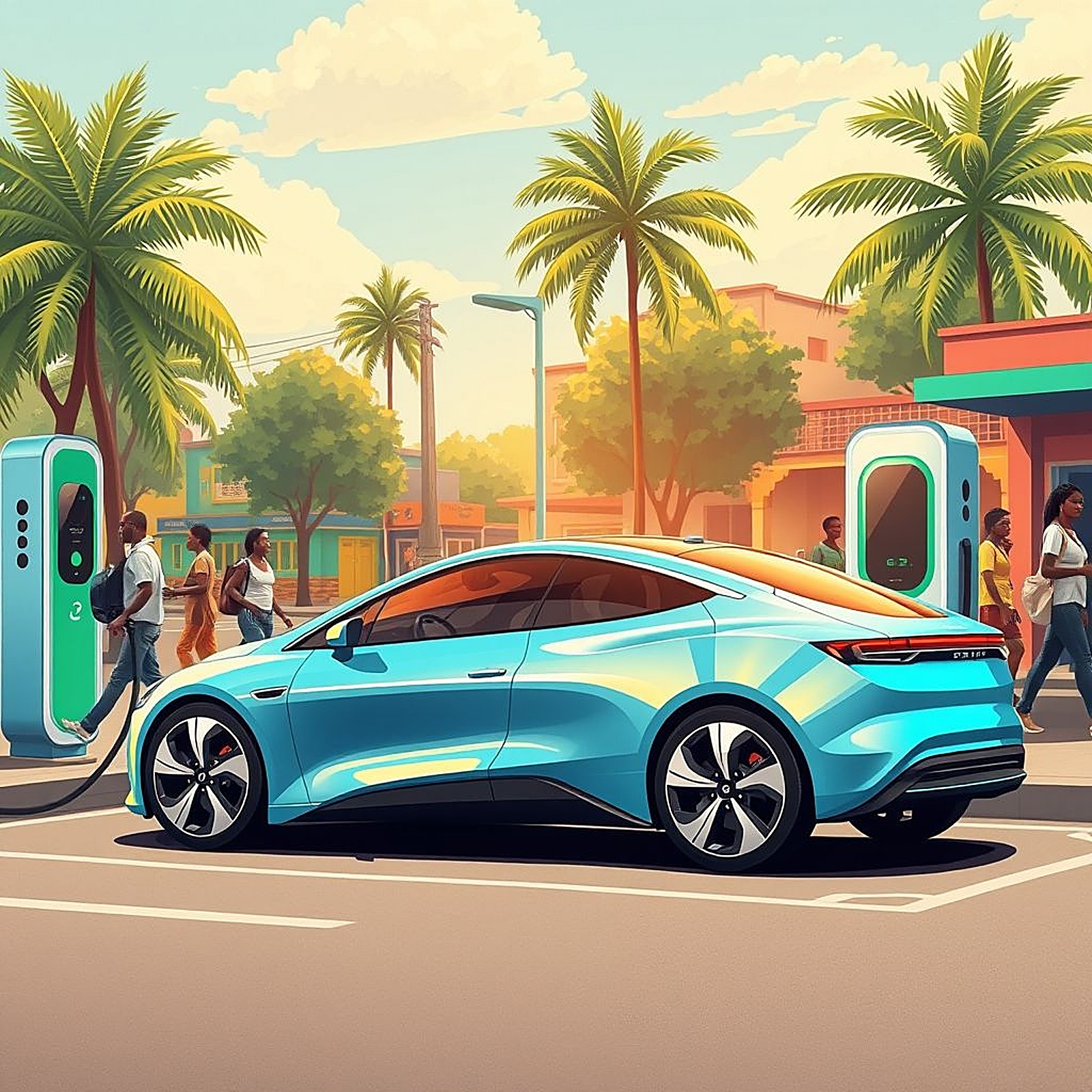
Africa holds 60% of the world's best solar resources, yet currently exploits less than 1% of this potential. The combination of the oil crisis and the drastic fall in the cost of renewable energy is creating unprecedented fertile ground for decentralized mobility. Above all, unlike Europe or the United States, Africa is not hampered by a legacy network of filling stations that would have to be converted at great expense. It can build an electric mobility ecosystem ex nihilo, calibrated to its urban and peri-urban realities.
A continent on the move: 14 billion dollars and a collective ambition
Far from being helpless in the face of this challenge, Africa has begun a remarkable shift. In 2025, the continent attracted nearly 14 billion dollars in financing for its clean energy projects, spread across 306 transactions involving 142 investors in 43 countries. More than 8 billion dollars went directly into renewable energy generation, driven by the continuing fall in the cost of solar photovoltaics.
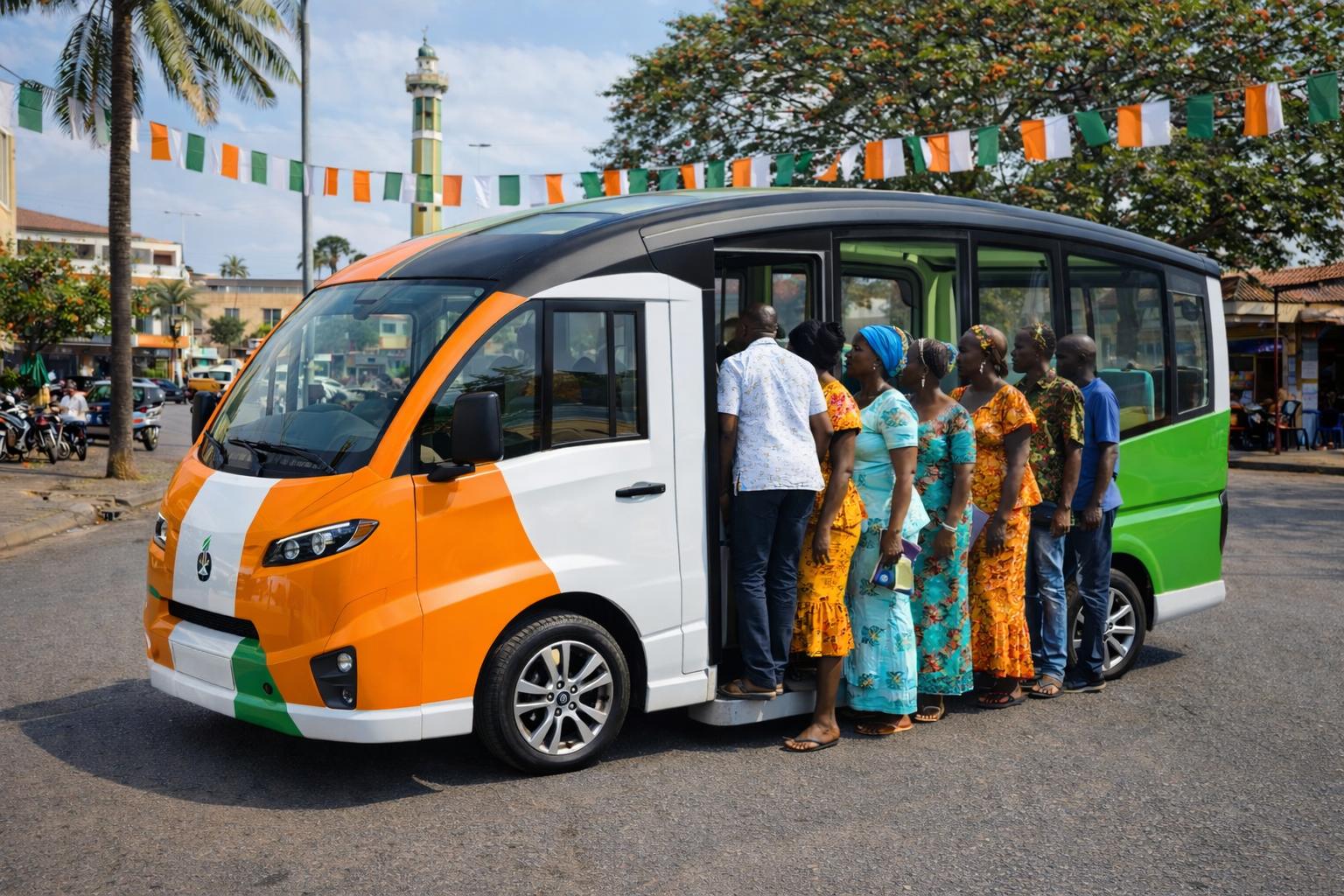
This momentum is now flowing directly into the mobility sector. Spiro, the African pioneer of battery swapping for electric two-wheelers, has just raised 30 billion CFA francs to extend its continental network. Local startups are developing electric motorbikes with swappable batteries, solar buses and off-grid charging stations. Africa Electric Mobility Week, whose latest edition was held in Addis Ababa, embodies this collective ambition: structuring the ecosystem, mobilizing investors and building a shared vision. Decarbonized mobility in Africa is no longer a matter of pilot projects; it is entering a phase of industrialization.
Chinese manufacturers move in on an untapped market
Who is watching the African automotive market most keenly today? Chinese manufacturers. BYD is actively expanding its dealer network in East, Southern and West Africa, with a first entry into Tanzania. In South Africa, sales of new energy vehicles more than doubled between 2023 and 2024, and now account for 3% of total sales.
“I am not intimidated by the slow adoption of electric vehicles by the African market. South Africa and the rest of Africa are a very big opportunity,” said Steve Chang, Managing Director of BYD Auto South Africa.
This offensive stance reveals a strategic conviction that Western manufacturers would be wrong to underestimate: Africa is not a market too poor for clean vehicles, it is a market that has been neglected for too long. By making oil potentially inaccessible or unaffordable, the Middle East crisis is hastening the pressing need for African governments to adopt incentive policies: removing customs duties on EVs, subsidizing solar charging infrastructure, and gradually banning imports of used combustion-engine vehicles.
An industry in the making, not just a market
Beyond energy independence, the introduction of low-emission solutions represents a historic industrial opportunity. Countries such as Morocco, South Africa, Rwanda and Kenya are beginning to position themselves no longer as mere importers of polluting used vehicles — which choke major cities and damage the public health of millions of city dwellers — but as assemblers, and even as manufacturers in their own right.
The economic equation is tipping. According to recent projections, owning an electric vehicle could cost less than owning a gasoline car in Africa by 2040, as battery costs continue to collapse. And as fuel prices soar under the effect of tensions in the Middle East, that horizon is approaching at full speed. An electric vehicle powered by locally produced solar energy offers what the fossil model has never been able to guarantee: predictable costs and sovereignty over one's supplies.
The challenges: real but surmountable
Skeptics will point to the fragility of electricity grids and the inadequacy of charging infrastructure. These obstacles are real, but they are not insurmountable. African electric mobility will be hybrid and smart: it will rely on off-grid solar, on swappable battery systems — already successfully deployed for two-wheelers in Benin, Togo and Uganda — and on the Vehicle-to-Grid model, which turns every vehicle into a micro power plant.
Hybrid and plug-in hybrid vehicles, for their part, offer a pragmatic transition, making it possible to reduce dependence on fuel without requiring infrastructure that does not yet exist. It is not a perfect system that is needed to get started: it is the direction of travel that must be irreversibly set.
The end of the fossil exception
The war in the Middle East is a brutal reminder that black gold is a finite resource, geopolitically toxic and economically unpredictable. For Africa, it is a priceless lesson — provided the necessary strategic conclusions are drawn from it.
By embracing low-emission solutions today, the continent is not simply following the global trend toward sustainability; it is anticipating its own resilience. The history of great industrial transformations teaches that they are rarely born of virtue alone: they emerge from crises that make inaction more costly than change. That crisis is here. The window is open.
Africa has the opportunity to prove that the development of the 21st century will not be built with the oil of the 20th century, but with the energy of the future. It is time for it to take the wheel of its own transition.
Sources: Electron Intelligence – Africa's Power and Energy Transition Investment Report 2025 ; Orishas Finance, March 2026 ; Africanews, March 2026 ; Agence Ecofin ; CPCS / Africa E-Mobility Week 2025 ; IFC ; Transcontinents Africa ; Horonya Finance ; AU-AFREC, African Energy Transition Strategy